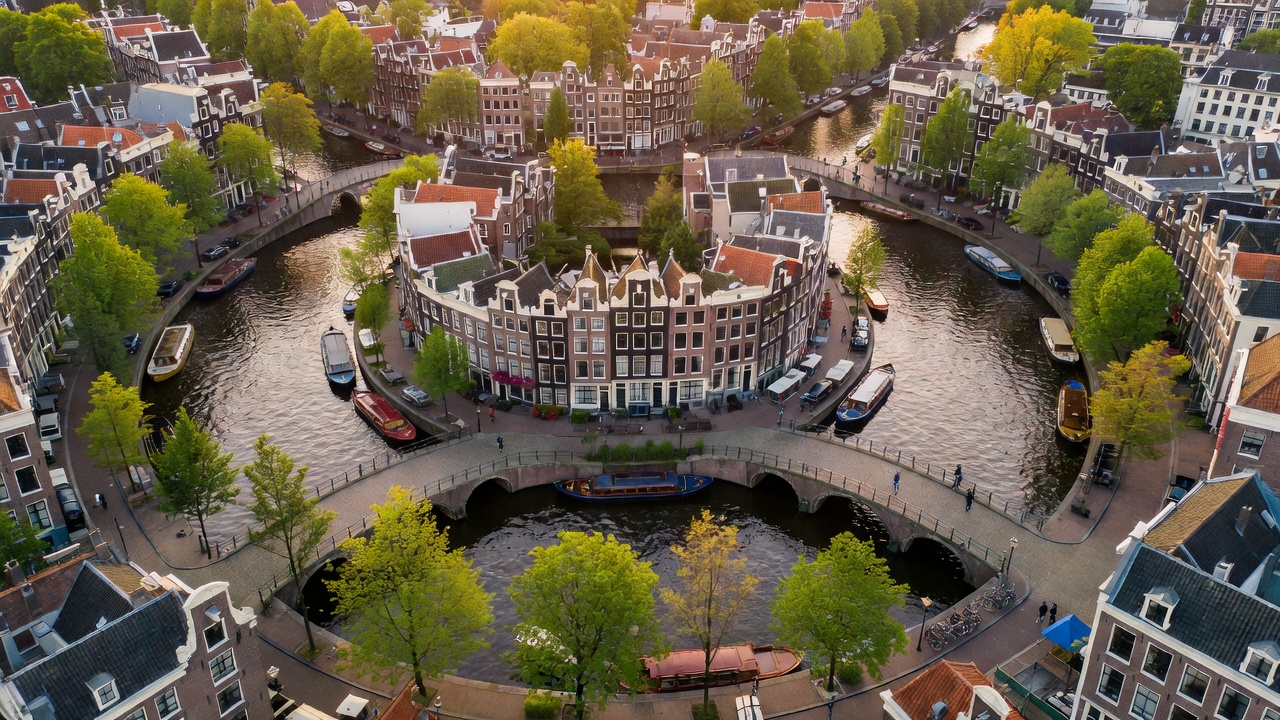
The Golden Bend, restored
Herengracht between Vijzelstraat and Leidsestraat is known as the Gouden Bocht — the stretch where seventeenth- and eighteenth-century merchants were permitted double-width plots and built accordingly. The Waldorf Astoria occupies six of these houses, joined behind their facades and returned to something close to their original grandeur: a monumental Louis XIV staircase attributed to Daniel Marot, painted ceilings, stucco, tall shuttered windows looking straight at the water.
Where the Pulitzer is playful and layered, this hotel is composed and formal. The public rooms are deliberately calm — a library-ish lounge, a small bar, drawing rooms with real fireplaces. Arrival is through a gated courtyard rather than off the pavement, which changes the whole tempo of a stay in the middle of a city this dense.
Rooms, suites and the garden
Room counts are low for a hotel of this footprint, which means unusually generous dimensions by canal-house standards: high ceilings on the piano nobile, deep window reveals, and bathrooms in marble rather than squeezed pods. Categories split between canal-facing rooms with the Herengracht view and garden-facing rooms overlooking the walled lawn behind the houses.
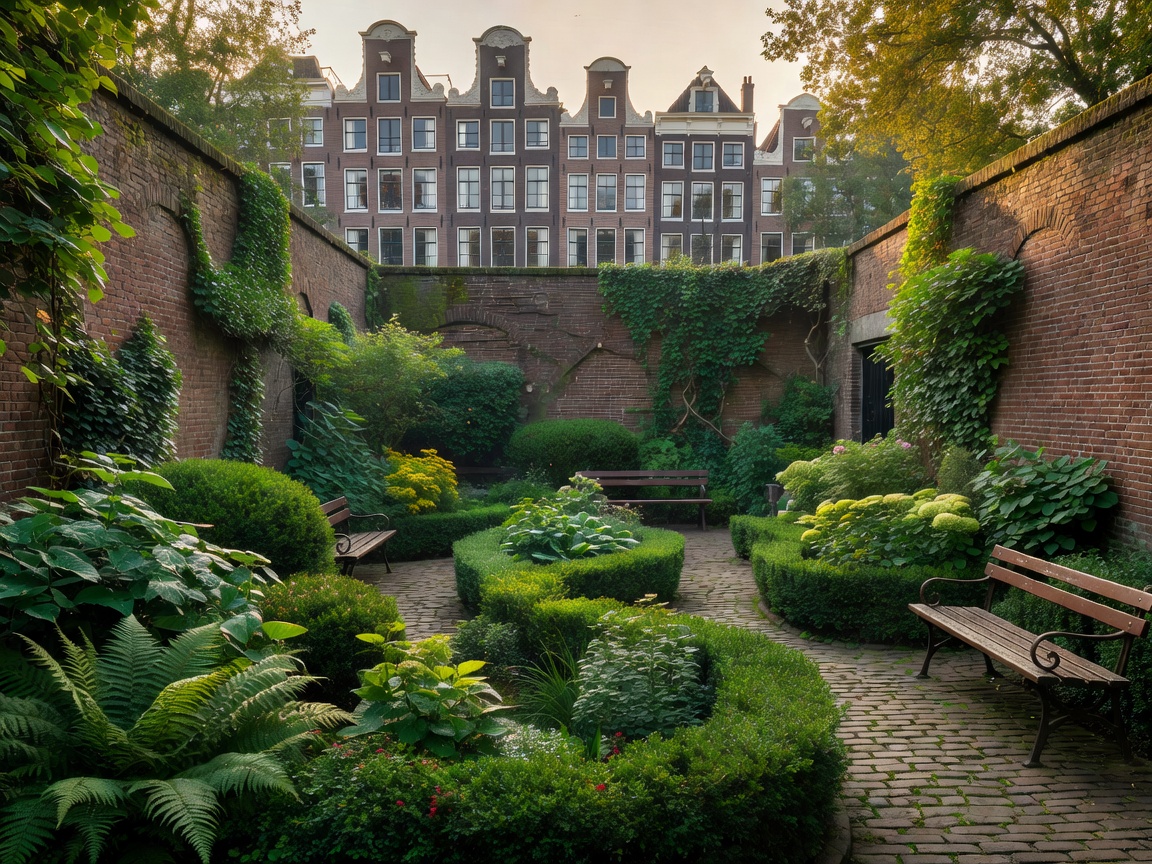
That garden is the hotel's rarest asset. A genuine private green space inside the canal ring, used for breakfast, cocktails and, in summer, an outdoor terrace service. It is also the reason garden-facing rooms are worth considering over the more obvious canal view: absolute quiet, and a window onto trees rather than tour boats.
Dining and the spa
The hotel's fine-dining room, Spectrum, works at the ambitious end of modern European cooking with a tasting-menu format and strong Dutch produce sourcing; it has held Michelin recognition in recent years and should be booked well ahead. Less formal eating happens in the brasserie-style room and the garden terrace, and afternoon tea in the drawing rooms is a local institution rather than a tourist set piece.
Wellness sits in the vaulted cellars: a Guerlain-branded spa with treatment rooms, hammam-style heat facilities, a compact pool and a gym. The vaults give it an atmosphere that purpose-built hotel spas rarely achieve — low brick arches, very little noise.
Indicative 2026 rates
| Category | Low season | High season |
|---|---|---|
| Deluxe room | from €560 | from €850 |
| Garden-view room | from €640 | from €980 |
| Canal-view junior suite | from €980 | from €1,550 |
| Historic suite | from €1,900 | from €3,400 |
Pros and drawbacks
Strengths
- The best-preserved grand interiors of the five hotels.
- Private walled garden — genuinely rare in the canal ring.
- Spa in the historic cellars; strong treatment menu.
- Ambitious fine dining on site.
- Gated courtyard arrival gives real privacy.
Consider carefully
- Highest entry price point in this collection.
- Formality can feel hushed if you want buzz.
- Vijzelstraat tram corridor is two minutes away and busy.
- Small room count means limited availability in peak weeks.
Verified links
- Official website — Waldorf Astoria Amsterdam
- MICHELIN Guide — Amsterdam restaurants
- Museum Van Loon — canal house museum, five minutes away
- UNESCO — canal ring World Heritage listing
Frequently asked
Canal view or garden view?
Canal for the photograph and the morning light; garden for silence and greenery. Light sleepers should take the garden without hesitation.
Is the spa open to non-guests?
Treatments are generally bookable by outside visitors subject to availability, but heat and pool access is prioritised for residents. Confirm directly.
Nearest museums?
Museum Van Loon and the Hermitage building are within ten minutes on foot; the Rijksmuseum is about fifteen.
Planning an anniversary or milestone stay?
This is the address we recommend most often for formal occasions. Tell us the date.
Contact the editors