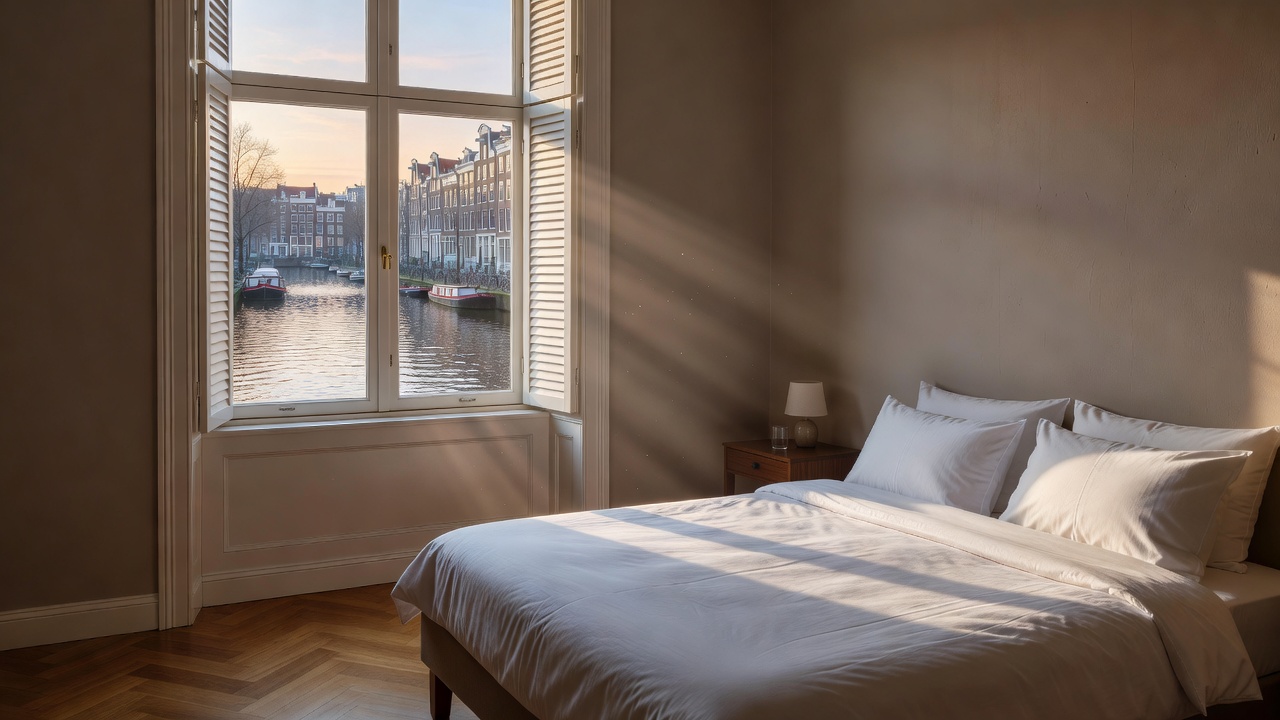
Booking engines flatten everything into a single price. In Amsterdam that flattening hides the most important variable in the city: orientation. Front or back, third floor or ground, water or trees — these decide the character of your stay far more than the category name.
What a canal view actually delivers
A true canal-facing room gives you elms along the quay, a bridge in the middle distance, reflections on the ceiling in the early evening and the particular Amsterdam pleasure of watching a boat pass while still in bed. On Herengracht and Keizersgracht the water is wide enough to give the view depth. On Prinsengracht the quays are narrower and the view is more intimate, more domestic.
What comes with it: bicycle bells from 07:00, delivery vans reversing, canal cruise commentary in three languages, and — in summer, particularly near Prinsengracht — pavement drinking that does not always end at midnight. Historic windows are often single-glazed or fitted with secondary glazing that helps but does not erase sound, because replacement is restricted.
What a garden or courtyard room actually delivers
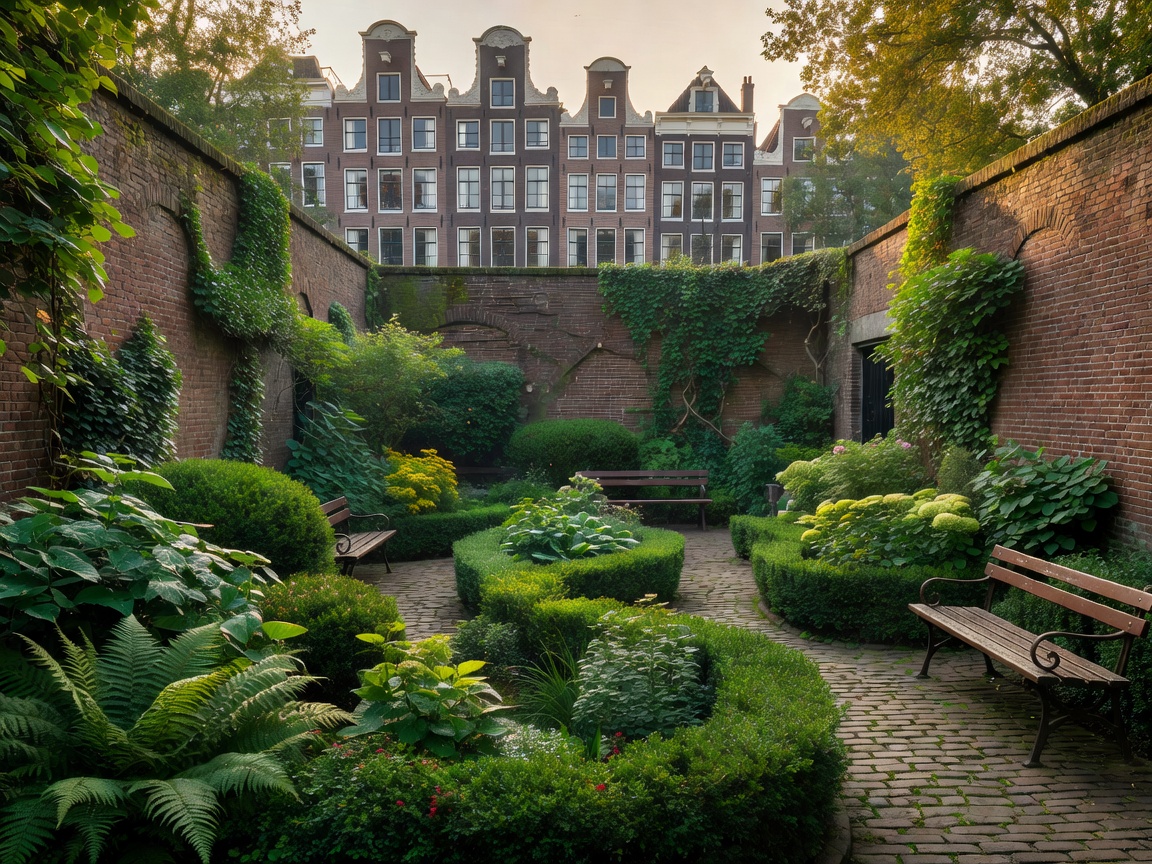
Behind these houses lie walled gardens, light wells and courtyards that most passers-by never see. A rear-facing room typically means silence, greenery, softer morning light and a strong chance of a lower price than the equivalent front room. What you lose is the postcard. Some rear rooms look onto attractive planted gardens; others look onto a service court or the back of the next block. The difference is worth one email to the hotel before arrival.
Hotel by hotel
| Hotel | Take this | Why |
|---|---|---|
| De L'Europe | Amstel-facing, 3rd floor or higher | Height clears boat traffic; the long river view is the hotel's whole point |
| Pulitzer | Garden room, unless you photograph | The inner gardens are silent; canal side catches summer street noise |
| Waldorf Astoria | Garden view for sleep, canal for occasion | Private walled garden is rare; Herengracht is quiet anyway |
| Conservatorium | Upper-floor duplex loft | Double-height arched windows; away from the tram corridor |
| Anantara Krasnapolsky | Rear or heritage room, not Dam-front | Dam Square is loud until late; heritage rooms carry the character |
Five variables nobody puts in the room name
- Floor height. In canal houses the piano nobile — usually the first floor above street level — has the tallest ceilings. Attic rooms can be charming or cramped depending on the roof pitch.
- Lift access. Some houses have lifts; some do not; connecting corridors may still include steps. Always ask, even in a five-star hotel.
- Window operability. Many protected windows open only partially. If you sleep with the window open, confirm.
- Bathroom geometry. Historic floor plans produce long thin bathrooms, split baths and showers in former closets. Room area alone tells you nothing.
- Neighbouring use. A room above a bar terrace or beside a delivery gate will behave differently from one three doors along at the same rate.
Requests that work
Hotels in this category respond well to specific, reasonable requests made in advance by email — much better than to vague notes in a booking field. Useful phrasing: "high floor, away from the lift shaft, canal-facing if available"; "rear-facing, quietest available in the category"; "we would prefer a room with a bath rather than a shower"; "please note we are light sleepers and would rather have a garden view than a canal view at the same rate."
What rarely works: asking for a specific room number found on a review site, or expecting a free upgrade at check-in during a Friday in April. Amsterdam runs high occupancy for most of the year.
When to pay for the upgrade
Pay up when the upgrade changes the building experience rather than the square metres: a duplex loft at the Conservatorium, a collector's suite at the Pulitzer, an Amstel-facing room at De L'Europe, a garden-facing room at the Waldorf Astoria. Skip the upgrade when it only adds floor area in the same orientation — in a canal house, the window is the product.
Sources and further reading
- UNESCO — canal ring World Heritage listing and protection scope
- I amsterdam — official city visitor information
- Het Grachtenhuis — how canal houses were built and divided
Want us to draft the request email?
Send the hotel, the dates and your priorities. We will write the three sentences that get results.
Contact the editors