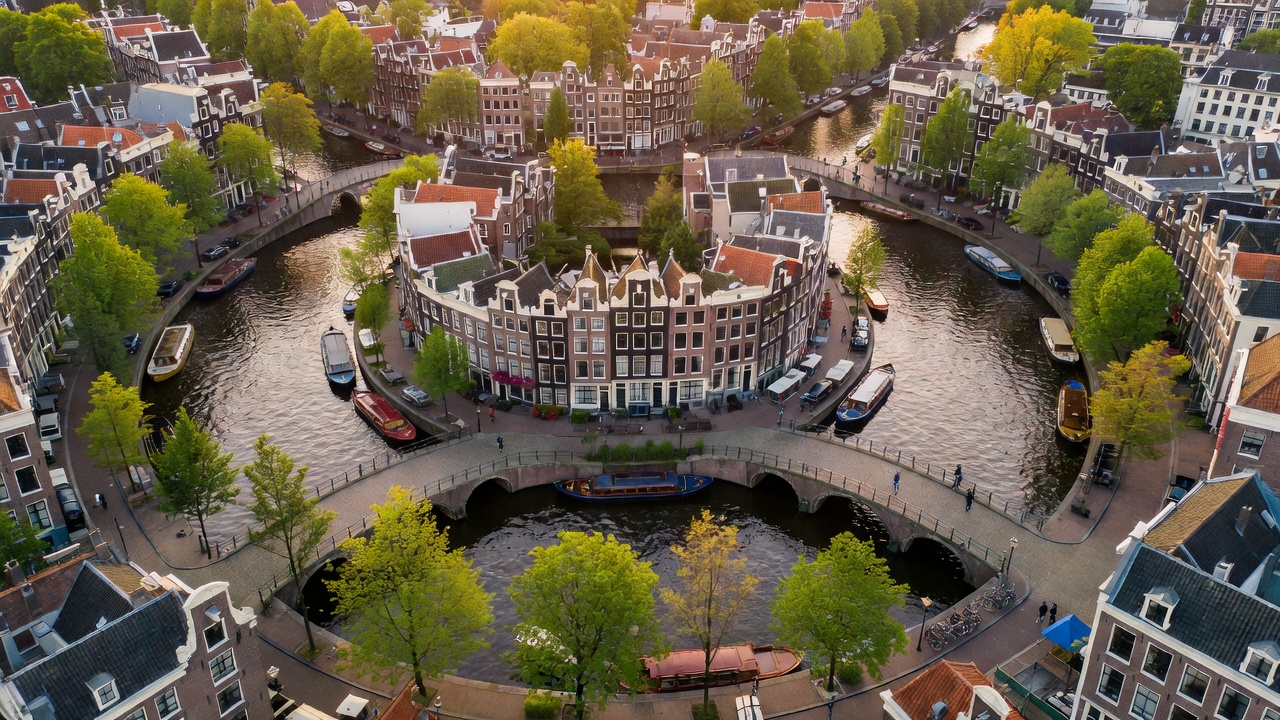
Amsterdam is not a city that happened to have canals dug through it. The canals are the plan. Understanding the order of the rings — and what each one was built to hold — tells you almost everything about how a hotel on it will feel at breakfast and at midnight.
One decision, four hundred years ago
By the early seventeenth century the medieval town inside the Singel had run out of room. The city's answer, begun around 1613 and completed in stages through the century, was a planned extension in concentric arcs: three great canals cut in sequence outward from the old centre, crossed by radial streets and lined with standardised plots. It was speculative urban development on a scale nobody had attempted, and it worked so well that the street pattern has barely changed since.
The order, moving outward from the historic core, runs Singel, then Herengracht, Keizersgracht, Prinsengracht, and finally the Singelgracht which marks the outer boundary. Memorise that sequence and you will never be lost in the centre again: if the water numbers are going up in that order, you are walking away from Dam Square.
What each ring was for — and feels like now
Singel
The original moat. Narrower, busier, and full of commerce: the floating flower market, bookshops, the Munttoren at its southern end. De L'Europe sits just off it where the Amstel arrives, which is why the hotel gets water views and city noise at the same time.
Herengracht — the Gentlemen's Canal
The most prestigious ring, and the widest plots. Its central stretch, the Golden Bend, allowed double-width houses for the wealthiest merchants and regents. Today it is the quietest of the three great canals, dominated by banks, consulates, foundations and the occasional canal-house museum. The Waldorf Astoria occupies six houses here, and the calm is real.
Keizersgracht — the Emperor's Canal
The middle ring: slightly less grand, considerably more mixed, and arguably the most pleasant to live on. Galleries, offices, apartments and a steady flow of cyclists rather than tour groups.
Prinsengracht — the Prince's Canal
The outermost of the three, built for artisans and smaller merchants, which is why the houses are narrower and the atmosphere is livelier. Cafés with pavement tables, houseboats, the Anne Frank House, the Westerkerk tower. The Pulitzer spans the block between Prinsengracht and Keizersgracht, which gives it a foot in both worlds.
The cross streets do the heavy lifting
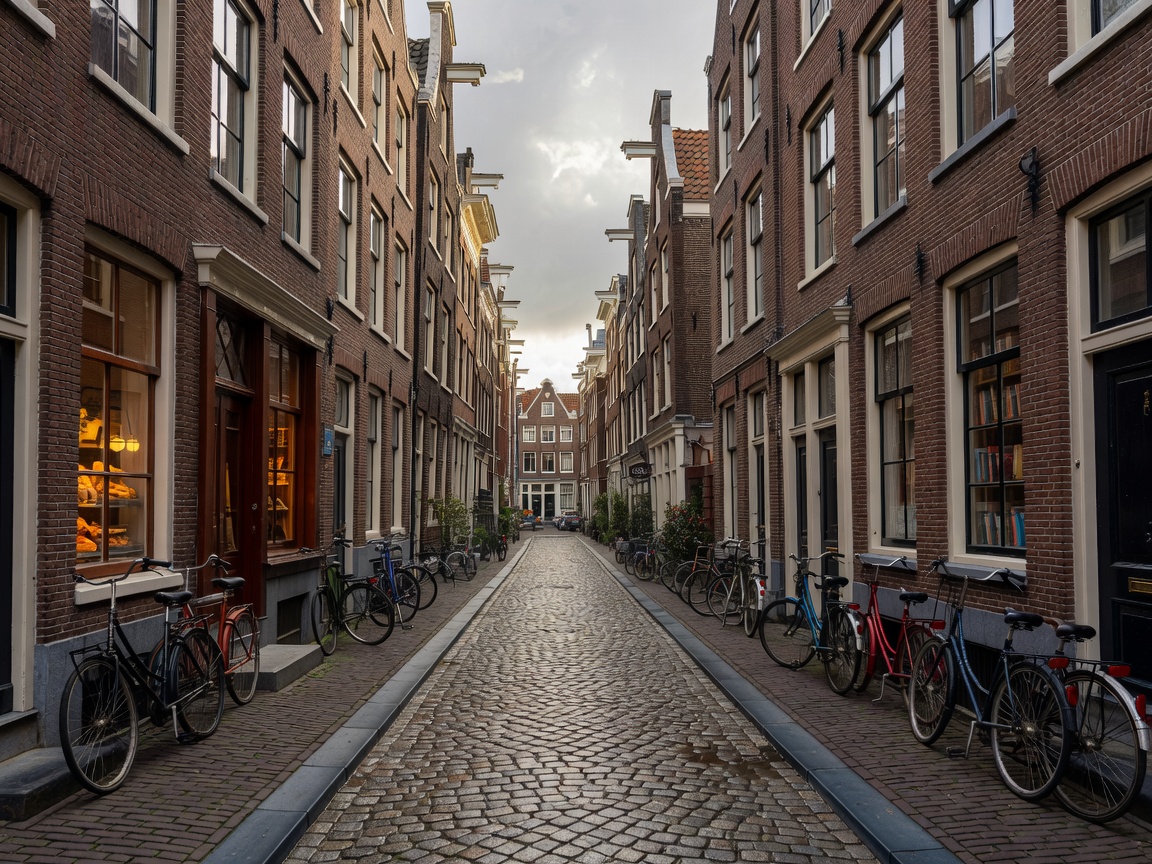
The canals are beautiful; the streets that cross them are where you eat. The best-known cluster is De Negen Straatjes, the Nine Streets, a grid of short connectors between Singel and Prinsengracht packed with independent shops, cheese counters, coffee bars and small restaurants. Reestraat, Hartenstraat and Berenstraat are the ones to walk first. Anything within five minutes of this grid — the Pulitzer above all — inherits its convenience.
Further south, Vijzelstraat and Leidsestraat are tram corridors: useful, loud, and not where you want a bedroom window. Utrechtsestraat, by contrast, is a rare radial street with genuinely good restaurants and very little tourist traffic.
Protection, and what it means for your room
The seventeenth-century canal ring was inscribed on the UNESCO World Heritage List in 2010. In practice that means facades, rooflines, window rhythms and often internal structural elements are protected. Hotels can restore; they cannot easily rebuild. Consequences you will notice: small lifts or none, corridors that change level, bedrooms of wildly different shapes at the same price point, and bathrooms fitted into whatever geometry the house permits.
This is why we insist on reading room categories rather than star ratings in Amsterdam. Two rooms in the same five-star canal-house hotel can differ by three metres of ceiling height and forty minutes of morning light.
Where the five hotels sit
| Hotel | Position | Character of the setting |
|---|---|---|
| De L'Europe | Amstel / Singel edge | Water on three sides, busy by day, quiet at night |
| Pulitzer | Prinsengracht–Keizersgracht block | Most walkable; Nine Streets on the doorstep |
| Waldorf Astoria | Herengracht, Golden Bend | Formal, hushed, institutional neighbours |
| Conservatorium | Outside the ring, Museum Quarter | Green, spacious, calm after dark |
| Anantara Krasnapolsky | Dam Square, inside the Singel | Loudest and most central; theatre of the city |
A walking route that explains the plan in ninety minutes
- Start at Muntplein, beside De L'Europe, and look north along the Singel flower market.
- Walk west along Herengracht to the Golden Bend; note the doubled house widths.
- Cut north on Leidsestraat, then right into the Nine Streets and browse.
- Reach Prinsengracht at Reestraat; turn north past the Pulitzer to the Westerkerk.
- Follow Prinsengracht south-west to the Anne Frank House, then cross to Keizersgracht.
- Return east along Keizersgracht to Vijzelstraat and end at the Waldorf Astoria's stretch of Herengracht.
Sources and further reading
- UNESCO — Seventeenth-century canal ring area of Amsterdam inside the Singelgracht
- I amsterdam — official visitor information
- City of Amsterdam — municipal information in English
- Het Grachtenhuis — museum of the canal ring's construction
Next: choosing the right window
Now that you know the rings, decide what your room should face.
Read: Canal View or Garden Quiet?