From scales and sonatas to a glass-roofed atrium
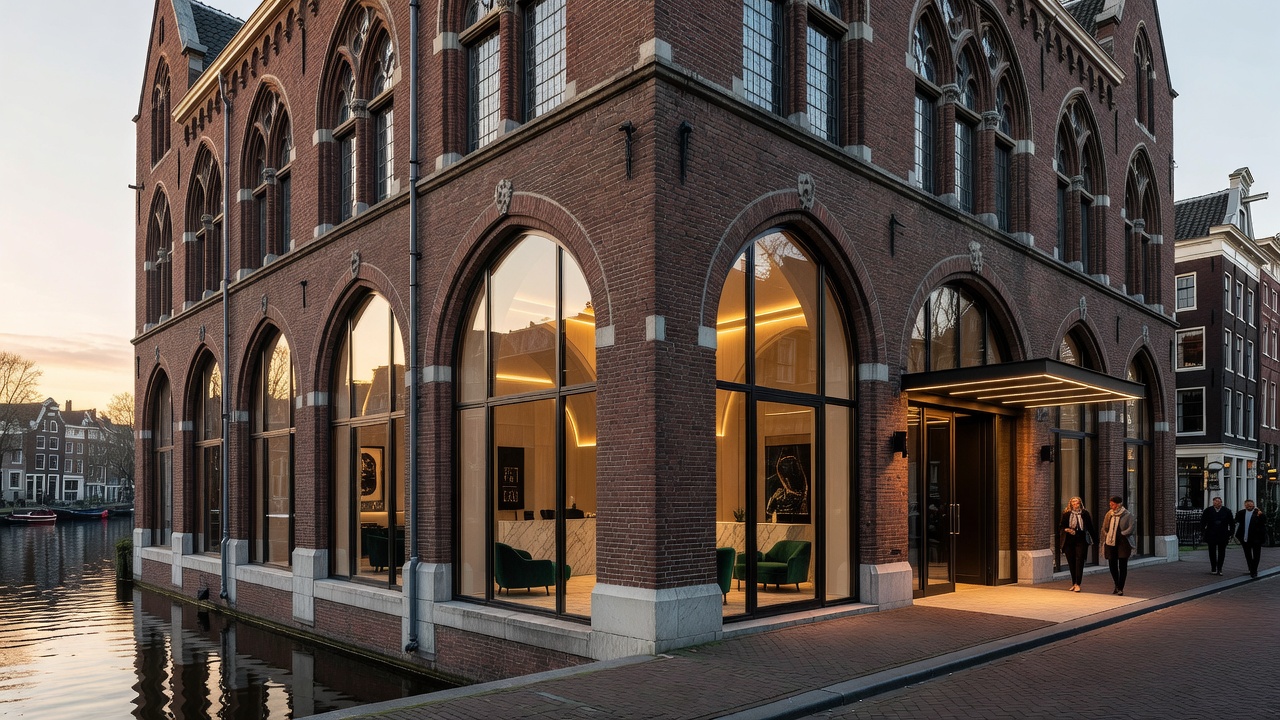
The building on Van Baerlestraat was designed by Daniel Knuttel as the Rijkspostspaarbank and later housed the Sweelinck Conservatory, which means generations of Amsterdam musicians practised behind these arched windows. The conversion inserted a glazed roof over the former courtyard and drilled a calm, precise contemporary interior into the brick and stone shell — the work of Milanese architect Piero Lissoni.
That contrast is the whole point. Outside: pointed arches, turrets, heavy masonry, a facade that belongs to the nineteenth century. Inside: pale stone, oak, glass balustrades, long sightlines and light falling from above into the Brasserie. Of the five hotels here, this is the one that will appeal most to guests who find gilded canal-house interiors oppressive.
Rooms and lofts
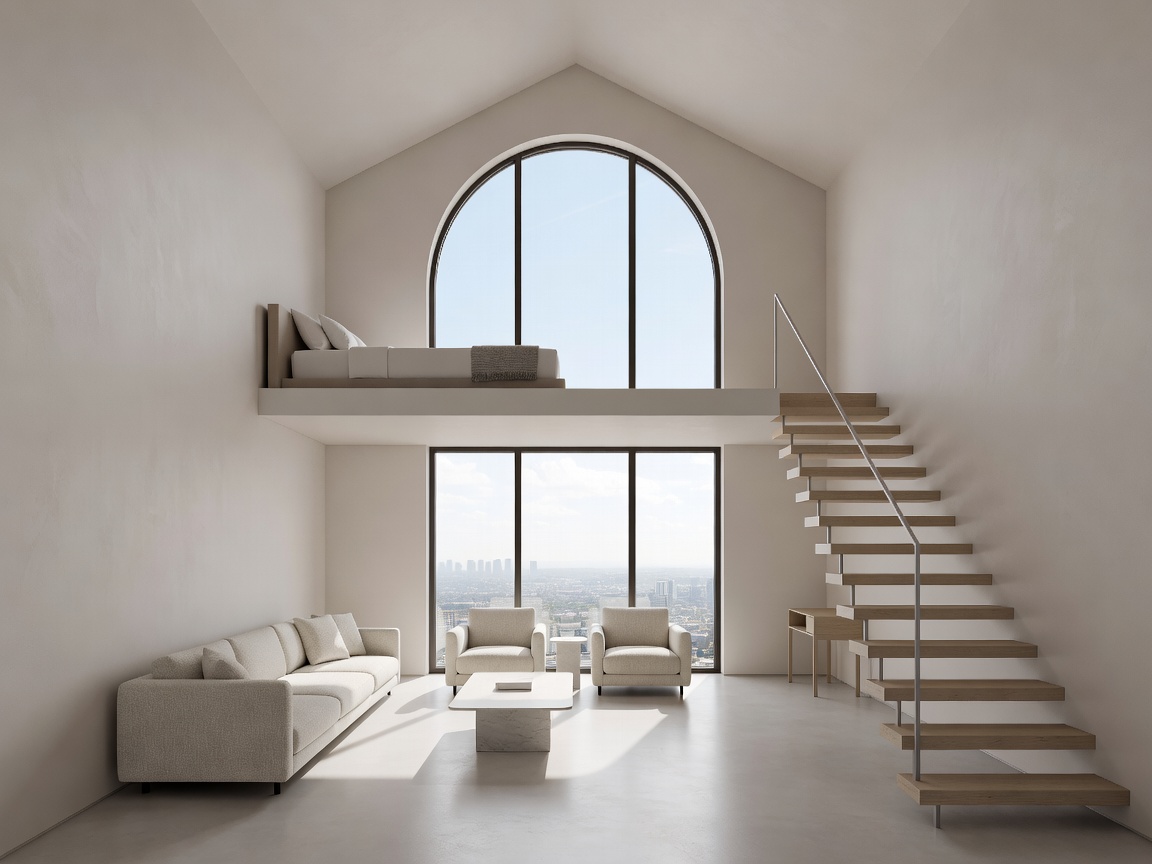
Room shapes are unusually varied because the hotel inherited a school's plan: former classrooms, practice rooms and a bank hall do not divide neatly. Many categories are duplexes with a living level below and a sleeping mezzanine above, reached by an open stair — a genuinely rare layout in Europe and the reason repeat guests come back.
Windows are the other distinguishing feature: tall, arched and often double height, looking either onto Van Baerlestraat and the Museum Quarter or into the quieter inner side. Ask for a duplex on an upper floor for the full effect of the arched glass.
Akasha and the dining rooms
Akasha Holistic Wellbeing is the largest wellness operation among the five hotels: around a thousand square metres below ground with a pool, sauna and hammam, watsu therapy pool, treatment rooms, a well-equipped gym and a programme of classes. It is the reason many guests choose this hotel over a canal-house address — no seventeenth-century building in the Grachtengordel can physically accommodate a spa this size.
Dining splits between the light-filled Brasserie under the atrium roof, which is the strongest hotel breakfast in this collection, a Japanese-influenced restaurant with a robata focus, and the Tunes Bar, which fills with a Museum Quarter crowd on Thursday and Friday evenings. Concerts at the Concertgebouw finish a two-minute walk away, so late tables matter here.
Indicative 2026 rates
| Category | Low season | High season |
|---|---|---|
| Conservatorium room | from €470 | from €740 |
| Studio / duplex loft | from €620 | from €980 |
| Two-bedroom loft | from €1,100 | from €1,850 |
| I Love Amsterdam suite | from €2,600 | from €4,200 |
Pros and drawbacks
Strengths
- Largest and best-equipped spa of the five hotels.
- Duplex lofts with double-height arched windows.
- Two minutes from the Concertgebouw; five from the Van Gogh Museum.
- Excellent breakfast under the glass atrium.
- Contemporary interiors with genuine architectural bones.
Consider carefully
- Not on a canal — the water is a ten-minute walk east.
- Museum Quarter is calm to the point of sleepy after 21:00.
- Tram traffic on Van Baerlestraat affects lower front rooms.
- Minimalist design will read as cool to guests wanting period romance.
Verified links
- Official website — conservatoriumhotel.com
- Royal Concertgebouw — programme and tickets
- Van Gogh Museum
- Rijksmuseum
Frequently asked
Is it a good base if I want the canals?
It is workable but not water-side. Reckon on ten to fifteen minutes on foot to Leidsegracht or the Singelgracht, or one tram stop.
Are the duplex lofts family friendly?
Yes for older children — the open mezzanine stair is not ideal for toddlers. Two-bedroom lofts are the safer family option.
Can I use Akasha without a treatment?
Resident guests generally have access to the pool and heat areas; day access for outside visitors depends on the package booked.
Travelling for the museums or a concert?
This is the address we recommend for a Concertgebouw evening. We can suggest which loft to request.
Contact the editors